 wheel
Decision Wheel for Kids: Games, Chores and No Fights
Also available in: Español
On this page
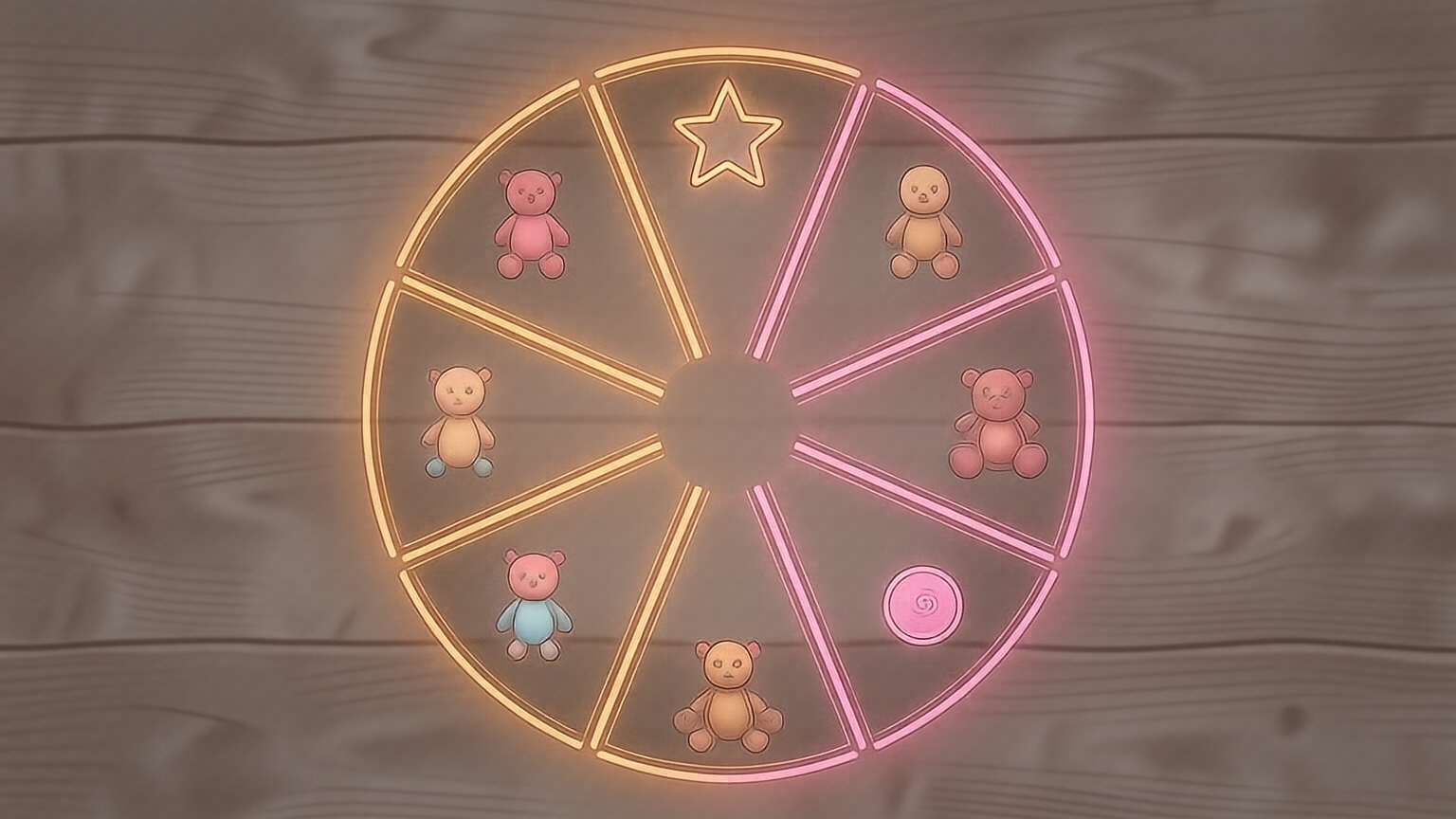
“Who goes first?”, “what are we playing?”, “I don’t want salad”. Children’s daily life is full of small conflicts that wear parents and teachers out. A decision wheel turns those conflicts into a game: the wheel decides, and the wheel has no favorites. Kids accept the result because nobody chose it — and because spinning is fun.
The trick is not magic, it is psychology. Children have a very sharp sense of fairness, and most arguments about turns or chores are really about one thing: the fear that an adult has a favorite. A spinning wheel removes that fear. Nobody is being punished, nobody is being favored — chance decided, and chance cannot be accused of bias.
In this guide you will find the everyday situations where a decision wheel for kids saves the most arguments, how to present the wheel so children take it seriously, ready-to-spin lists for home and the classroom, and answers to the questions parents and teachers ask most.
Where the wheel saves the day
These are the flashpoints in most households and classrooms. Each one has a simple wheel setup:
- Choosing the game: “what do we play?” becomes “spin and see”. Everyone suggests a game, all go in the wheel, and the result is a game everyone proposed.
- Assigning chores: who sets the table, who feeds the dog, who picks up the toys. The wheel distributes without anyone feeling singled out.
- Dinner wars: each kid adds an option (or accepts the ones you propose) and the wheel chooses. “The wheel said so” ends more arguments than “because I said so”.
- Order of turns: who goes first on the swing, in the game, or in the bathroom. Spinning is fairer than arguing.
- Classroom decisions: which game in recess, which topic first, who presents. Teachers get a neutral referee that kids trust.
Notice the pattern: in every case the wheel is not deciding anything truly important. It is deciding the small stuff that adults normally arbitrate by hand — and that arbitration, not the decision itself, is what creates the friction.
How to present it to kids
A decision wheel only works as a game if kids buy in. Five rules make the difference between a toy that gathers dust and a fixture of family life:
- Make it visual: big colorful wheel with emojis. The more it looks like a game, the better it works.
- Let them add options: kids accept the result much more easily when they put the options in themselves.
- Keep it short: 4-6 options is plenty for kids. Too many and the wheel gets slow.
- First spin counts, with kindness: if a kid is really upset, you can offer one re-spin as a group decision — but make it rare, or the wheel loses its power.
- Use it as a ritual: “let’s see what the wheel says” as a regular phrase makes decisions feel neutral and fun instead of imposed.
One more thing worth repeating: consistency. If the wheel decides on Tuesday but gets overruled on Wednesday because the result is inconvenient for an adult, children learn fast that the referee is fake. Honor the spin, and the wheel will settle small arguments for years.
Lists that work
The hardest part of a decision wheel is not spinning it — it is building a good list. These starter lists work in almost every home: copy them, then let your kids edit them until they feel like their own.
- Chores: set the table, feed the pet, tidy the room, water the plants, take out the trash.
- Games: board game, drawing, playground, building blocks, hide and seek.
- Snacks: fruit, yogurt, sandwich, crackers — with the healthy options weighted higher if you want.
- Weekend plans: park, cinema, home movie, visit grandma, bike ride.
Save the lists you use most as presets. A saved wheel you spin in ten seconds beats a new negotiation that takes twenty minutes — and presets mean the wheel is always one tap away when a conflict starts.
For teachers: the wheel in the classroom
The wheel scales beautifully from a family kitchen to a classroom of thirty students. These are the four uses teachers repeat most:
- Random selection without favoritism: who presents, who answers, who’s the group leader this week. No one can accuse you of picking favorites.
- Forming teams: spin the wheel to assign students to groups or to decide which team starts.
- Review games: put the review questions on the wheel and spin to pick the next one. Turns studying into a game.
- Fair distribution of tasks: classroom chores assigned by the wheel are accepted without complaint.
Project the wheel on the board so every spin is public. When the whole class watches the result, the wheel becomes the school’s most trusted referee — and you stop being the bad guy who always picks the same student to erase the board.
Real cases: how the wheel settles it
Abstract advice is fine; here is what this looks like on an ordinary Tuesday.
Case 1: the Monday morning rush
Elena has two kids, seven and nine, and every morning is the same fight: who gets dressed first, who picks the backpack, who goes down the stairs first. She built a morning routine wheel with four slices — clothes, breakfast, teeth, shoes — and lets the wheel choose which step the older one handles first. The argument about order disappeared in a week. The morning did not get shorter, but it got quieter, which is what she actually wanted.
Case 2: the swing standoff
At the park, two siblings and a neighbor kid all want the swing at the same time. Instead of refereeing, their dad pulls out the wheel on his phone: three names, one spin, and the winner goes first with a two-minute timer. The other two spin next. Total conflict resolution time: fifteen seconds. Compare that with the three-minute negotiation this standoff used to cost before the wheel existed.
Case 3: Friday review in fourth grade
Mr. Torres puts the week’s twelve review questions on a wheel, one slice each. Every Friday, the class spins together and answers whatever the wheel lands on, as a team. Participation went up because nobody can predict — or game — which question comes next, and the quietest students raise their hands more when the wheel, not the teacher, chose the moment.
Adopt the phrase: “the wheel said so”. It is shorter, calmer and more effective than “because I said so”.
Decision wheel for kids: FAQ
The questions parents and teachers ask most, answered without fluff.
Does the wheel work with very young kids?
Yes, from around 3-4 years old: they understand “the wheel decides” and love spinning it. Use images or emojis instead of text if they can’t read.
What if my kid doesn’t accept the result?
The wheel works best when the options were agreed together. If there’s a tantrum, don’t force it: offer a re-spin occasionally, but keep the rule of the first spin for most cases.
Can the wheel help with routines?
Yes: morning routine (which order to get dressed, breakfast, teeth), homework order or bath time become a game. Kids who fight over routine love the wheel.
Is it fair for siblings?
It’s the fairest referee there is: no favorites, no bias. The key is that both participate in making the list.
Can teachers use it every day?
Yes, and it’s recommended: it removes favoritism accusations and adds a game-like element to routine decisions.
At what point should I stop using the wheel?
You don’t — you widen it. Around eight or nine, kids can build and manage their own lists, which turns the wheel into a decision-making tool instead of a parental trick. The goal is not to spin forever: it is to practice deciding small things well, so deciding bigger things comes naturally later.
Three final tips before you spin
- Build the first list together: the buy-in you get in ten minutes of co-creation saves hours of arbitration later.
- Honor every spin you commit to: one overruled result teaches more than a hundred explanations about fairness.
- Keep it light: the moment the wheel feels like a punishment system, kids stop playing. Celebrate the result, even the chore nobody wanted.
If your kids share a language with you beyond English, the Spanish version of this guide, the ruleta de decisiones para niños, works perfectly for bilingual households and classrooms.
Want the adult version of the same discipline? Our tips for using a decision wheel guide covers when the wheel helps and when it quietly backfires. And for the next birthday party, these wheel games for parties will keep the whole group spinning.
Spin and smile: the decision wheel turns “because I said so” into “the wheel decided”. Try it with your kids today.
A wheel for every age
How you use the decision wheel for kids changes as they grow:
- Ages 3-5: two or three big picture slices, an adult spins, and every result is celebrated. The win is the ritual, not the choice.
- Ages 6-9: kids build the lists themselves and take turns spinning. This is the age where “the wheel said so” does its best work.
- Ages 10+: introduce weights and fairness rules — equal slices, no secret edits, one spin per conflict. The wheel becomes a lesson in how good random systems work.
Start small: pick one recurring fight this week — the chores, the screen-time order, the Sunday plan — and give it a wheel. One calm spin is all the proof your household needs.