 wheel
Wheel to Decide What to Eat: Goodbye to “I Don’t Know What to Order”
Also available in: Español
On this page
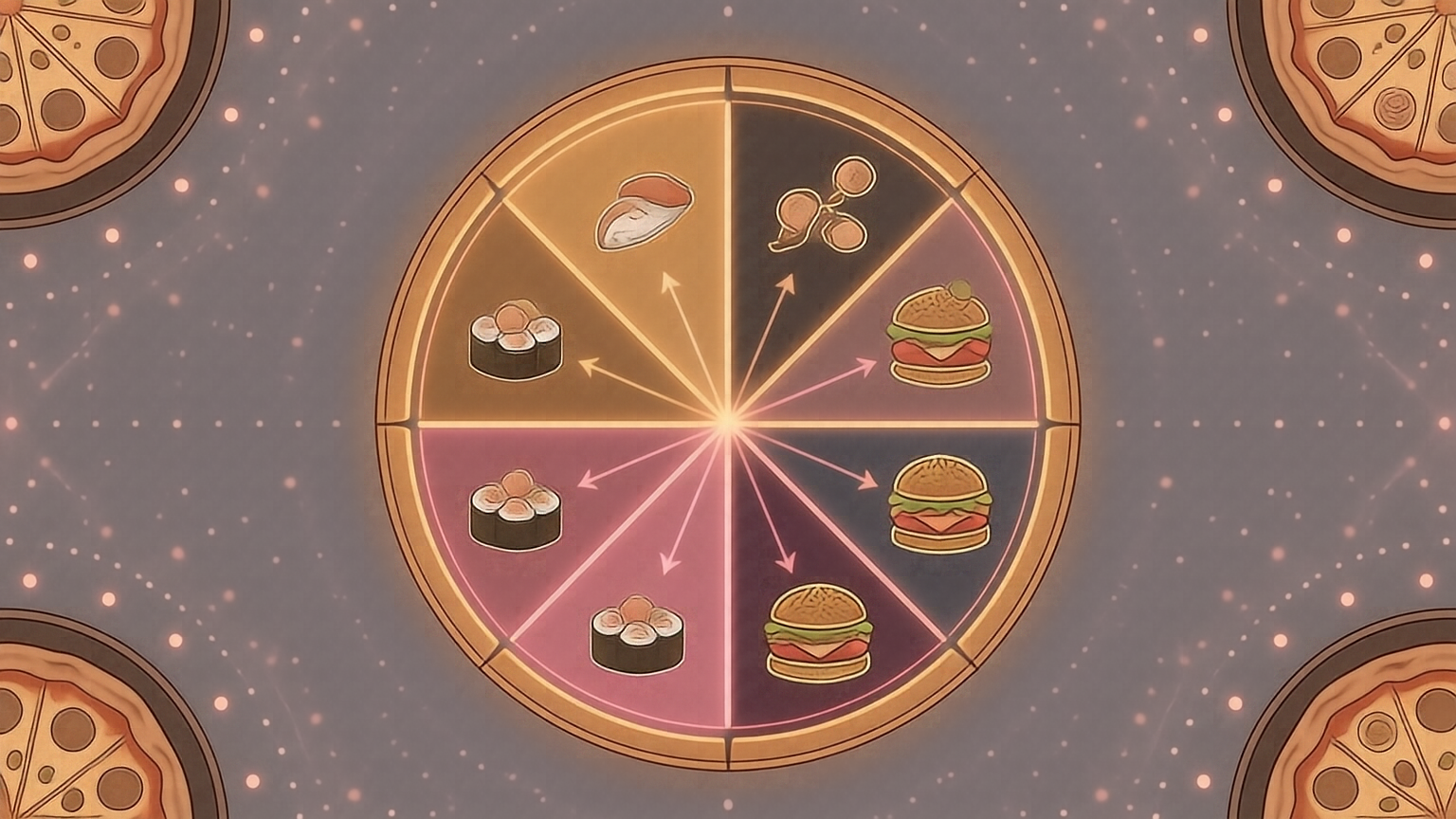
It’s 2:30 PM, your stomach is empty and you have half an hour to decide. You open the food delivery app, close it. You open it again. You stare at the same restaurant as always, hesitate, and end up ordering the same thing as yesterday. If this sounds familiar, it’s not hunger: it’s decision paralysis.
A decision wheel turns that loop into a three-second game: you type your options, spin, and eat. It’s not magic, it’s removing the friction of choosing.
“What should I eat?” is one of the most repeated questions of adult life. Most of those choices are low-risk, yet each one spends a little willpower. A wheel to decide what to eat works because it delegates a trivial decision to chance and saves your judgment for the things that actually matter.
Why deciding what to eat is so hard
Choosing food has a disproportionate mental cost. Hunger (which clouds judgment), the memory of recent meals, budget, diet and the fear of getting it wrong all come into play. With so many variables, the brain prefers not to decide and to repeat.
There is a name for this trap: the paradox of choice. When every option looks acceptable, comparing them takes longer than enjoying them. Delivery apps make it worse by showing hundreds of restaurants, filters and ratings that invite you to keep scrolling instead of committing.
A wheel won’t fix your nutrition for you, but it breaks the loop: you narrow the options down to the ones you actually want and let chance break the tie. The trick is to prepare the list before you’re hungry, not when you have to decide.
Five forces usually pull at the same time:
- Hunger pushes toward fast, salty, familiar.
- Memory quietly rules out anything you ate this week.
- Budget filters the menu before you even look.
- Goals (diet, training, saving money) pull in the opposite direction.
- Company adds other people’s preferences to the mix.
How to use a wheel to eat better
The wheel is only as good as the list behind it. These rules turn it from a party trick into a daily habit:
- Make the list calmly: once a week, write down 8-12 meals or restaurants you’d genuinely enjoy. Save the list (most online wheels let you save it) and bring it back whenever you need it.
- Include realistic options: if you don’t feel like cooking, don’t put “cook something healthy” in the list. Options must be equally doable.
- Add a wildcard: include an option like “whatever’s left in the fridge” or “repeat the favorite”. Chance is more fun with a little risk.
- Spin with a limit: decide that the first spin counts. If you spin until you get what you wanted, the wheel is pointless.
- Keep it readable: six to twelve options is the sweet spot. Longer lists slow the spin and make the result feel arbitrary even to you.
If you want the full psychology of spinning without fooling yourself, our general tips for using a decision wheel guide covers when the wheel helps and when it doesn’t.
List ideas by situation
Same tool, different lists. The trick is to match the options to the real constraint of the moment: time, money or company. One wheel for weekday lunches is not the same wheel as a Friday night decision.
- Takeout: pizza, sushi, burger, Italian, Mexican, Thai, salad.
- Cooking at home: pasta, rice, roast chicken, omelet, soup, chickpea salad, salmon.
- Eating out: the usual place, the new one that just opened, the one around the corner, the one in the next neighborhood.
- Couple or shared-flat battle: everyone brings two options, they all go in and chance decides. Nobody can complain because everyone chose the options.
Build one saved wheel per situation and you will never face a blank screen again: “lunch at work”, “dinner at home”, “weekend treat”. The first spin of the week costs effort; every spin after that is free.
Tricks to make the wheel actually work
- Add weights if something pulls you more: if you’re on a diet, give healthy options more weight; if it’s Friday, give it to the indulgent ones. Wheels with adjustable probabilities let you do this.
- Emojis in the options: 🍕🍣🥗 make the list faster to read and more fun.
- Use it with kids: the wheel turns “what’s for dinner” into a game and ends dinner wars. Each kid brings an option and chance decides.
- Use it for the weekly menu too: plan 4-5 dinners of the week in one spin and do the grocery shopping in one go.
Three real cases of the food wheel in action
The couple who “doesn’t know”
Marco and Ana have argued every single night at 9 PM for the same reason: neither of them “minds anything”, which means both mind everything. Their fix is the shared-flat rule applied to two: each person adds three options they would genuinely eat, and the spin is final. Six slices, zero negotiation. If you run the same dinner in Spanish, the companion guide ruleta para decidir qué comer walks through the couple list step by step, including how to settle the “anything but pizza” veto without a rematch.
The flatmates’ fridge truce
A four-person flatshare had an unwritten rule that nobody wrote down: whoever cooked last cooked next. Resentment built up faster than dishes. They put seven options in the wheel — four simple meals, two deliveries under ten euros, and one “leftovers roulette” — and gave the person who shopped a double slice. Three weeks later nobody complains, because the wheel has no favorites and no memory. Fairness is the feature; food is just the excuse.
The office lunch group
Six colleagues, forty minutes, one chat thread with zero proposals. The office wheel works differently from the home one: keep it short (five restaurants within walking distance), weight the cheap options higher on payday-free weeks, and spin on speakerphone in the group call. The result lands in seconds, and the walk back is shorter than the debate ever was. For more work-specific setups, see our decision wheel for work guide.
Food wheel FAQ: the questions everyone asks first
Short, honest answers to the searches people run before building their first food wheel. If you are still deciding whether the tool is worth it, start here.
What is the best way to randomly pick what to eat?
The most reliable method is a decision wheel fed with a pre-approved list: six to twelve meals or restaurants you would genuinely enjoy, one spin, first result accepted. Random alone is not the point; a random pick from a bad list just automates regret. The wheel only works when every slice is one you would eat happily. If you are curious about what happens under the hood — how a wheel turns a click into a fair result — our breakdown of how an online decision wheel works explains randomness, weights and the biases to watch for.
Is there an app that decides what to eat for me?
You do not need one: any web decision wheel does the job in the browser, on phone or laptop, with no install. That said, dedicated apps add saved lists, weights and shareable links that matter if you spin daily. We compare the top options in our guide to the best apps to decide randomly, including which ones keep your food lists between sessions. Pick for features, not for the logo.
How do I stop re-spinning until I get the answer I want?
Set one rule before the first spin: the first result counts. If you catch yourself spinning again, that hesitation is useful data — it usually means you already know what you want and the list is missing it. Fix the list, not the spin. Two escape valves are fair game: a genuine constraint (allergy, budget, closed kitchen) or a pre-agreed “one re-spin per week” token that both sides can spend once.
What if my partner or flatmates hate the result?
They cannot, if the list was built together. Every person adds the same number of options, and anything anyone truly refuses never enters the wheel. That shared-list rule is what turns the spin from an argument into a referee. The Spanish companion post, our ruleta para decidir qué comer, walks through the couple and flatshare setups slice by slice, including the “anything but pizza” veto.
Can a food wheel handle picky kids too?
Yes, with one adjustment: keep the options few and visual, and let each child bring a slice. When kids help build the list, they argue with the result far less, and dinner turns into a two-minute game instead of a negotiation.
One spin, then eat
The whole system fits in five steps:
- Write 8-12 meals you would actually enjoy — calm, not hungry.
- Save the list, or one wheel per situation: weekdays, weekends, office.
- Weight the slices if a goal (budget, diet) deserves a nudge.
- Spin once and accept it.
- Rebuild the list weekly, not at 2:30 PM.
Decision fatigue over food is a modern problem with an ancient solution: leave it to chance, but only chance you have curated. Prepare the wheel today and tomorrow’s lunch debate ends in a single spin.